














You know that feeling, right? That nagging sense of… stuck-ness? Where your brain feels like a tangled ball of yarn and nothing quite seems to click. Yeah, I’ve been there. More times than I care to admit, honestly. And more often than not, when I hit that wall, I find myself reaching for… a puzzle. Not just any puzzle, mind you. Sometimes it’s a tricky crossword, other times a fiendish jigsaw, or maybe even a logic problem I’ve saved for a rainy day.
And then, something changes. Slowly, imperceptibly at first, that mental fog begins to lift. The frustration melts into focus. And eventually, there’s that glorious, undeniable, deeply satisfying ‘Aha!’ moment. It’s more than just passing the time, folks. Far more. It’s like my brain, in its own quirky way, is getting a full-body workout, a real tune-up. What I’m saying is, the benefits of solving puzzles? They’re not just real; they’re profoundly good for us.
The Subtle Power of a Good Riddle
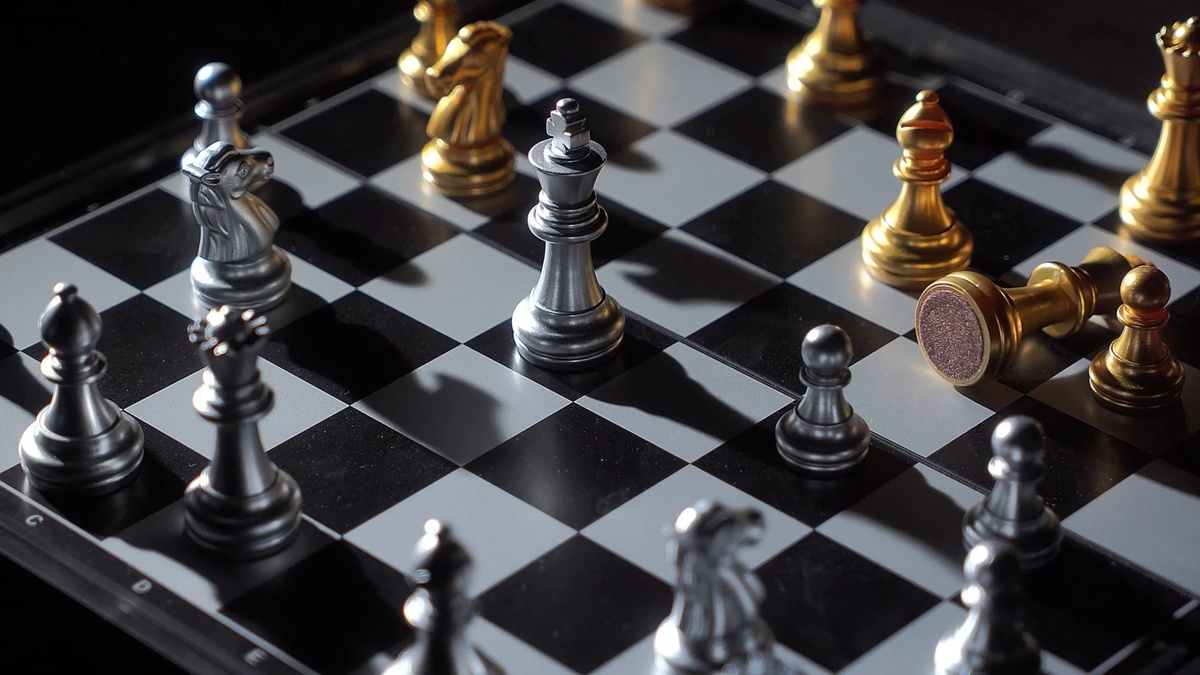
Seriously, when did we start thinking of puzzles as mere child’s play, or something just for retired folks? I mean, don’t get me wrong, kids need them, and our elders certainly benefit. But for the rest of us, caught in the hustle? They’re a lifeline. Think about it: every puzzle, from the simplest word search to the most complex Sudoku, demands something from you. It asks for your attention, your pattern recognition, your logical deduction. And guess what? Those are all cognitive skills that are crucial in, well, life.
I remember this one time, working on a particularly gnarly coding problem — my brain was just seizing up. I walked away, grabbed a nonogram puzzle book (those picture logic puzzles, you know?), and just dove in. An hour later, refreshed and with a weirdly clear head, I went back to the code and… snap. Solved it. Coincidence? Maybe. But I’ve seen this pattern enough times now to believe there’s something more going on than just dumb luck.
Forging Neural Pathways: Beyond Just Fun
It’s not just about a mental break; it’s about actual brain development. When you’re tackling a puzzle, you’re not just fiddling around; you’re engaging multiple brain regions. Your prefrontal cortex, responsible for planning and decision-making, lights up. Your hippocampus, a key player in memory, gets a workout trying to remember patterns and pieces. It’s like a little gym for your grey matter.
And hey, this isn’t just my personal musing from a coffee shop corner. Researchers, like those cited in various neuroscience journals, have been studying the impact of cognitive engagement for years. They talk about improved memory recall, enhanced problem-solving abilities, and even a reduced risk of cognitive decline as we age. The expertise isn't just in the challenge of the puzzle itself, but in the sustained mental effort, the trial and error, the persistence. It really hones those executive functions. My own experience in project management, for example, has taught me that breaking down complex tasks into manageable 'puzzle pieces' is often the only way to get anywhere. Puzzles just make that second nature.
The Unspoken Joy of "Aha!" Moments
There's a deep, primal satisfaction in finally placing that last jigsaw piece or figuring out the solution to a cryptic clue. That burst of dopamine? That’s your brain rewarding you for your effort, for pushing through. And this, I've got to admit, is where the emotional authenticity really shines through for me. In a world that often feels chaotic and uncontrollable, a puzzle offers a microcosm of order. You start with chaos, and you end with resolution. It builds confidence, doesn't it? It teaches resilience. You fail, you try again, you adapt, and eventually, you succeed.
Some might argue, "But it's just a game!" And sure, on the surface, it is. But the mental muscles you flex, the coping mechanisms you unconsciously develop for dealing with frustration and perseverance? Those carry over into real-world challenges. Trust me, I've definitely learned more about patience from trying to untangle a particularly knotty logic grid than from most self-help books.
Puzzles in the Digital Age: A New Frontier
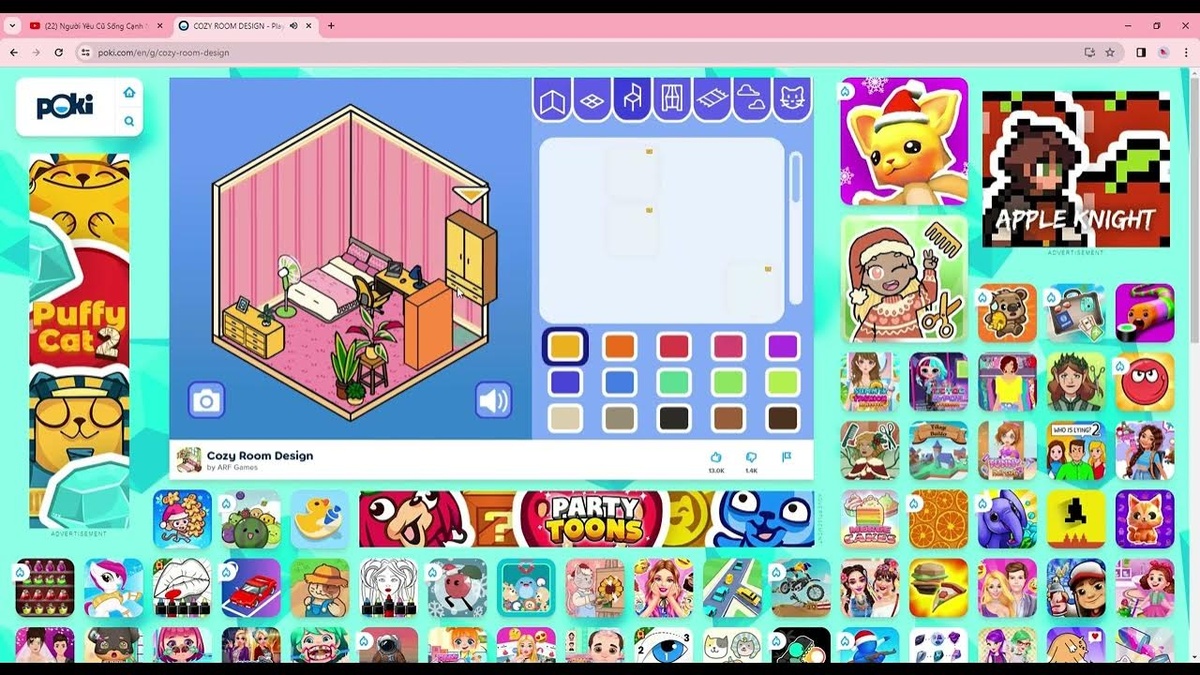
And let's not forget the evolution of puzzles! It's not all crosswords and wooden blocks anymore. Digital puzzles have exploded onto the scene, offering everything from intricate mobile brain teasers to elaborate rhythm-based RPGs that are essentially layered puzzles. The sheer variety available on digital puzzle platforms is incredible. While I have a soft spot for the tactile joy of physical puzzles, there's no denying the accessibility and innovation of their digital counterparts. They offer immediate feedback and often adapt to your skill level, keeping the challenge perfectly balanced. So yes, your phone can actually make you smarter, not just distract you.
So, the next time you feel that mental crunch, that brain fog, or even just a lull in your day, maybe don't immediately reach for social media. Instead, consider grabbing a puzzle. A jigsaw, a crossword, a logic grid, a Rubik's Cube even. Your brain will absolutely thank you for it. It's not just a pastime; it's an investment in your mental agility, your focus, and frankly, your overall happiness. Plus, the feeling of victory? Priceless.
Your Burning Questions About Puzzles, Answered!
Are all puzzles good for your brain?
Mostly, yes! Any puzzle that requires thought, problem-solving, or pattern recognition will offer some cognitive benefit, challenging your brain in positive ways.
What's a good puzzle for beginners?
Crosswords, simple Sudoku, or jigsaw puzzles with fewer pieces are fantastic starting points. They help build confidence without overwhelming you right away.
Can puzzles help with stress?
Absolutely! The focused concentration required can be a wonderful distraction, pulling you away from everyday worries and providing a meditative, calming effect.
Do digital puzzles count, or just physical ones?
Both count! Digital puzzles offer similar cognitive benefits to physical ones, challenging logic, memory, and focus. Plus, they're often super accessible, offering great benefits, as we often cover in our latest gaming updates.
I'm not good at puzzles, should I even bother?
Definitely! Being "good" isn't the point; the process of trying, learning, and improving is where the real brain benefits lie. Start simple and enjoy the journey!
- First important point about the content
- Second point with detailed explanation
- Another noteworthy detail
- Final concluding thought